
Road Signs from the Dawn of Motoring Have Shaped Today’s Signage
Signs change the way we perceive the world around us and modify our behaviour. And they can save lives without us even knowing it.
Signs are all around us, and we use them to inform and influence our decision making, as well as to alert us to hazards, of which me might otherwise be unaware. From a warning of a wet or slippery surface on a hospital corridor, to speed limits posted outside a school, it is easy to see that they potentially save us from injury or even death countless times every day.
Here, we take a look at how safety signs have developed over the years. We will see that the modern day safety signs for the workplace have largely evolved from signage used on the roads since the introduction of the motor car. It raises an interesting question: If we were still riding around in horses and carts, would the health and safety signage look completely different?
 The earliest signs
 The earliest signs
In the days before cars, the most common signs you would see around you were the milestones, or distance markers, that are still liberally sprinkled around the roads of the UK. These told you how far it was in miles to the next town or a major city, but provided no other information.
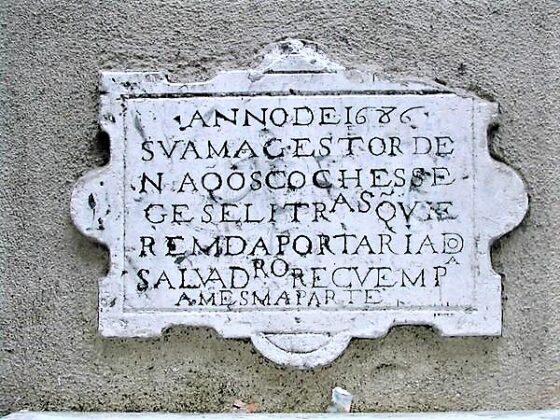
Warning signs were uncommon back then. A sign in Salvador Street, Lisbon, which essentially instructs all coachmen to reverse park, is dated 1696 and is often cited as the oldest safety sign in existence.
Pictures and symbols
 As you might guess, that sign in Lisbon is carefully carved on stone – you have to stop and read it, and it is not something that immediately catches the eye. This was good enough, perhaps, for a 17th century coachman manoeuvring his horse and carriage, but with the arrival of the internal combustion engine, we were going to need something that conveyed information clearly and concisely.
It was with this in mind that in a spirit of cooperation that we can all learn from in these Brexit days, European governments put their heads together in 1909 and agreed on four pictorial road signs for the health and safety of drivers. These were the signs we are all familiar with to this day to mean bend in road, bump in road, railway crossing, traffic intersection.
From these humble beginnings, a broader range of road signs was developed and standardised across Europe from the pre-war years and continuing right up till the late 1940s.
Better visibility
While those early signs looked in form very much like the ones we see today, they were certainly not clearly visible, typically painted on wooden or metal surfaces. As cars got faster and night driving more common, the sign makers worked on improving visibility through embossed letters and hi-vis compounds.
Off the roads and into the workplace
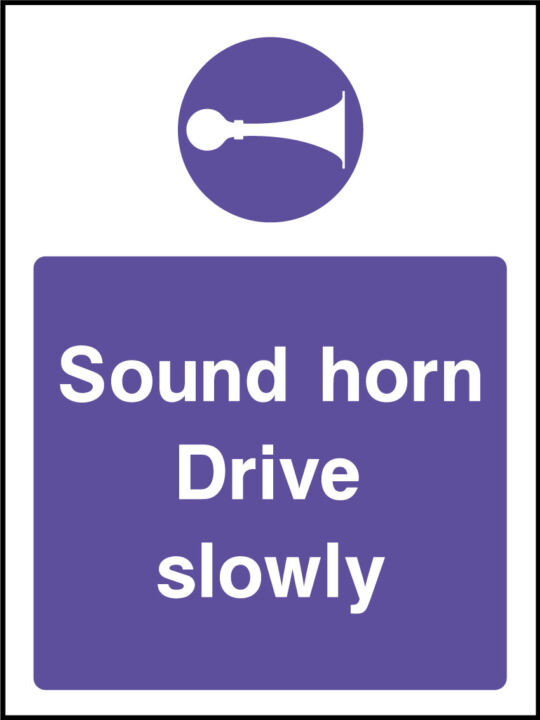
Look around any workplace today and you will see safety signs warning us of anything from spilled water on the floor to live voltage and risk of electrocution. Organisations such as the Health and Safety Executive are constantly updating and refining these for the protection of visitors and workers, but it is intriguing to note that they are all created using those design principles created from the earliest days of motoring.