
Every Holiday Season Sees More Deaths and Injuries.
Natural beauty spots across the globe can also be extremely hazardous. Is the addition of warning signs long-overdue, or would it be a blot on the landscape?
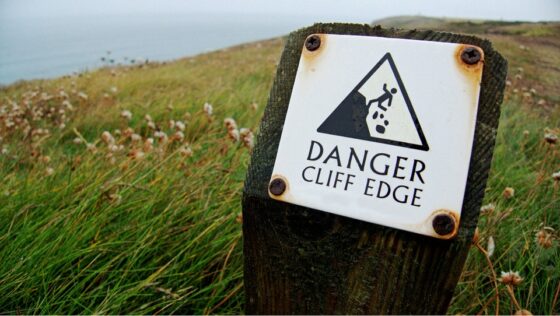
Accidents happen everywhere, not just in the workplace. If you’ve ever taken a walk along a river or near cliffs, you will no doubt have seen safety signs warning of the dangers. Some people feel we need more, while others argue that we need to protect nature from more signs.
Today, we look at a classic example from America, which highlights the need for more safety signs. Every year, Elk River Falls in Avery County, North Carolina, attracts thousands of visitors, especially at this time of the year. It also claims on average half a dozen lives per year. Six have died already in 2018, the last two in the space of just six weeks.
It is just one example of the thousands of places that families will be exploring this summer that are both beautiful and potentially lethal. At Elk River Falls, there have been calls for more health and safety signs to alert visitors to the potential hazards, and for guard rails to be installed. Others feel that the rails would destroy the natural beauty and that the danger of a huge waterfall surrounded by sheer drops and rocky outcrops should be blindingly obvious.
Nobody told me not to
On the face of it the latter contention sounds compelling. However, we live in an era in which we are accustomed to any and all risks being assessed and mitigated – particularly when we are on unfamiliar territory. There was widespread surprise, and more than a little laughter, when a story hit the headlines last month concerning a man spotted by Swanage Coastguard walking along a ridge just eight inches wide with a 90 foot drop to either side.
When the coastguard team intervened and asked him why he was placing himself in such a dangerous situation, he replied that he didn’t realise there was any risk, as there were no signs advising him against walking there.
Sure, it sounds a little crazy, but perhaps it shows that the UK’s impressive record in creating a health and safety culture has come at something of a cost. People are less likely to assess risks to themselves if they feel that assessment is somebody else’s responsibility. And if no mitigation measure has been implemented, for example a sign or a guard rail, then the subconscious assumption is that no risk exists.
More accidents at Elk River
Back in North Carolina, meanwhile, the accidents continue and the death count rises. Just last month, a woman and her eight year old daughter wandered to the very edge of the self-same drop that has claimed so many lives. A park ranger was present, discussing the falls with local journalists, and shouted to them to step back to safety. The woman, Dell Lowe, told journalists: “we would have gone further if he hadn’t warned us it was dangerous.”
Health and safety no longer left to chance
Perhaps the biggest difference between attitudes to health and safety today and those of years gone by is that so little is now left to chance. Bags of peanuts warn those with nut allergies that the product contains nuts, theme park water rides warn people that they will get wet and so on.
Ultimately, we sometimes need to take a step back from the cliff edge, both literally and figuratively, and take a little responsibility for our own actions. However, at locations like Elk River Falls, it is surely a case of when, not if, the safety measures will be improved to prevent further loss of life.