
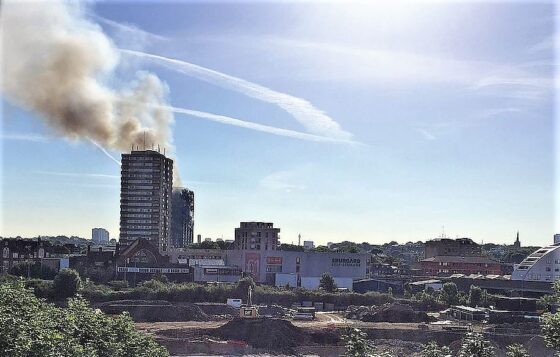
In the wake of the Grenfell Tower tragedy, it’s vital that steps are taken to improve fire safety in public buildings across the UK
On 14 of June 2017, the country watched in horror as a fire swept through the 24 storey, 220 foot-high Grenfell Tower block in Kensington, South West London. Despite the brave attempts of firefighters to battle through the flames, many people remained trapped on the upper floors, unable to escape the blaze. The current death toll stands at around 80, and those who have survived have lost their homes, all their belongings and, in many cases, friends and family members. It is a truly shocking event that has provoked sympathy and outrage across the country.
Fire safety failures
A full public inquiry into the fire will be held, and until the results of that inquiry are made public, it’s difficult to say with any certainty what caused the fire.
However, in the wake of the tragedy there have been many reports of fire safety failures at the site, including restricted access for emergency vehicles, a lack of sprinklers, inadequate fire escapes and the use of combustible cladding on the exterior of the building. Residents had even written to the local council to complain about the building’s poor fire safety standards, warning that they could result in loss of life.. While these factors may not have directly caused the fire, they almost certainly will have played a role in exacerbating the size and scale of the tragedy.
And it looks like the issue of inadequate fire safety is not just confined to Grenfell. Since the fire in June, a further 75 high rise buildings in 26 local authorities, including schools and hospitals, have failed fire safety tests, and many residents have been forced to evacuate their homes while buildings are made safer.
Improving fire safety
The Grenfell Tower inferno really brought home the importance of fire safety and the fact that failure to pay adequate attention to it can have truly tragic consequences. Nobody wants to see another Grenfell happen so it’s vital that lessons are learned by councils and building owners across the country.
Most fires are caused by people’s actions, such as smoking, cooking, or using faulty appliances, but they can be made much worse by poor fire safety measures. Due to their design and structure, high rise buildings are arguably more at risk than other types of buildings so it’s imperative that owners and managers ensure that appropriate fire safety precautions are put into place.
As well as larger-scale works such as retrofitting sprinkler systems or creating additional or more effective fire escape routes, there are also additional smaller yet effective steps owners can take to help mitigate the risk of fire.
Prevention is always better than cure and fire safety signs can help residents to take steps to prevent fires from starting, as well as providing instruction and guidance in the event of a fire. If a fire does occur, having an emergency evacuation plan in place, along with clearly signposted emergency exit routes, will help ensure that people can exit the property quickly and safely.
If anything positive is to come out of the Grenfell Tower fire, it is that authorities are finally giving fire safety the attention it deserves. And if fire safety failures continue to be identified and acted upon, we can hopefully prevent similar tragedies from occurring in the future.