
Health and Safety is Everyone’s Responsibility
Should schools be doing more to increase awareness of basic health and safety in the wider world?
Start a new job on a construction site, in a power plant or at a warehouse, and what is the first thing that will happen? That’s right, the famous health and safety briefing. For employees, health and safety training might take a few minutes or several days, depending on the industry and environment. And even visitors often need to watch a safety video before they can enter a site.
Those of us who have visited a lot of sites and seen a lot of videos are probably struggling to conceal a yawn. After all, they are all much the same, and it is usually fairly obvious stuff. Yet it raises the question of why we are not all being taught these basics, before we are even allowed to set foot in the big wide world unattended.
There were 137 workplace fatalities in the year to June 2017. How many of these could have been avoided if everyone had a better grounding in basic health and safety practices, from hazard awareness to knowing the meaning of health and safety signs?
Workplaces and risk
Before we say anything else, we need to understand that 137 is a very low number. In the USA, the number stands at around 4,000, and in Canada it is approximately 850. Allowing for differences in population, that means in the UK, there is one fatality for every 500,000 people. In the US, it is one per 80,000 and in Canada, one per 50,000.
However, 137 deaths is still 137 too many. Statistics from the HSE show a disproportionately high level of fatalities among the self employed. In fact, it is more than double the rate for employees. The implications are clear: The basic health and safety training that employees receive is a major contributor to saving lives.
There is the additional fact that younger people often lack the necessary experience be aware of the hazards that surround them, particularly in unfamiliar environments. They are also more likely to lack the confidence to seek help or advice if they are concerned about their safety.
Keeping youngsters safe
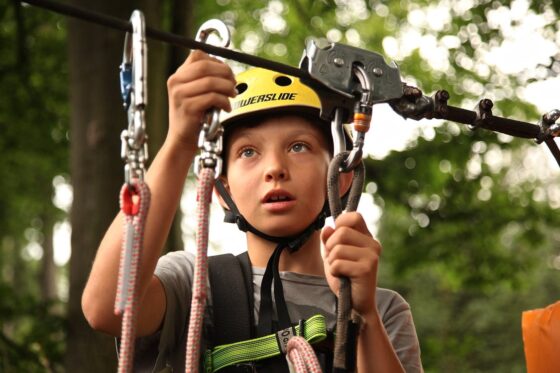
A good grounding in risk awareness could also lead to an improved quality of life for today’s children. We have all heard the complaints about children being “wrapped up in cotton wool” or “not being allowed to be children” and how things were different in the old days when kids were out playing by themselves all day.
Perhaps instead of complaining about it, we can do something to change things. If we want our children to have the freedom to play outdoors without the need for constant adult supervision, it makes sense to equip them with the tools, knowledge and skills to know how to assess and understand risks and hazards and thereby to take responsibility to keep themselves safe.
Schools can play a vital role in preparing youngsters for both the risks they face in the world around them and specifically in the workplace after they leave school, by providing appropriate safety education.