
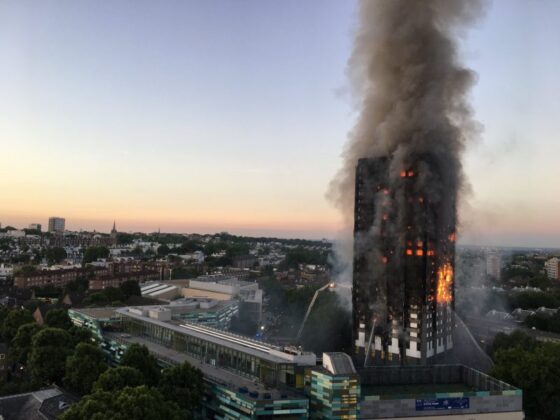
Building regulations relating to fire safety fall woefully short, a fact that the recent Grenfell Tower tragedy has brought into sharp focus.
Throughout the UK and beyond, people woke on 14 June to the horrific sight on their TV screens of London’s Grenfell Tower engulfed in flames. Yet many fire safety experts knew that it was only a matter of time before an incident of this magnitude happened.
Investigations have shown that shortcomings in the escape routes, fire escape signs, sprinkler systems and the cladding used in the construction itself all contributed to the tragedy. But according to those in the fire safety industry, the issue is not with Grenfell Tower’s compliance, but with the underlying regulations themselves.
Accident waiting to happen
Sam Webb is a retired fire safety expert who has been lobbying for changes to the Building Regulations ever since the Lakanal House tragedy, which claimed six lives in 2009.
In an interview with the BBC, he said that he had asked the decision makers from Building Regulations what it would take to convince them that the regs need attention: “I told them I have a dread of waking up one day, and a tower block has burned down in the middle of the night and killed hundreds of people, and asked them what they will say then.”
Exactly what they said is not known, but one thing that is clear is that the regulatory system is being scrutinised like never before in the wake of a tragedy where the exact death toll is still unknown, but stands at around 80 lives.
Are the Regulations Adequate?
The biggest criticism of the regulations is that they are confusing, ambiguous and open to interpretation. We all know that one of the major issues at Grenfell Tower relates to the cladding that was used. What is still unclear, however, is whether that cladding was or was not compliant with the applicable building regulations.
Take a look at the history, and Sam Webb’s frustration becomes all the more understandable, as these same ambiguities were raised in the wake of the Lakanal House fire.
Following the inquest, coroner Frances Kirkham CBE wrote to the government and requested a formal review of Approved Document B, which explains how to ensure compliance with the Building Regulations on fire safety. Ms Kirkham stated that the document was difficult to use, and recommended that it needed to provide clearer guidance in a variety of areas, but specifically on “the spread of fire over the external envelope of the building.”
What needs to change?
The focus is very much on the building envelope at present, and understandably so, but similar ambiguities and shortcomings have also been identified when it comes to sprinkler systems, exit routes and signage. At Grenfell, firefighters reportedly had to write floor numbers in the stairwells so they could know where in the building they were – something as simple as large, clearly visible floor numbers on stairwell can help save lives.
Clearly a full and comprehensive review of the Building Regulations needs to take place, and this view is echoed by the Fire Sector Federation, the Local Authority Building Control and a number of other influential bodies.
There is concern that this could take years, and the government will wait on a lengthy public enquiry before a review takes place. If there is one lesson that Lakanal House and Grenfell Tower can teach us, however, it is that change needs to happen now.